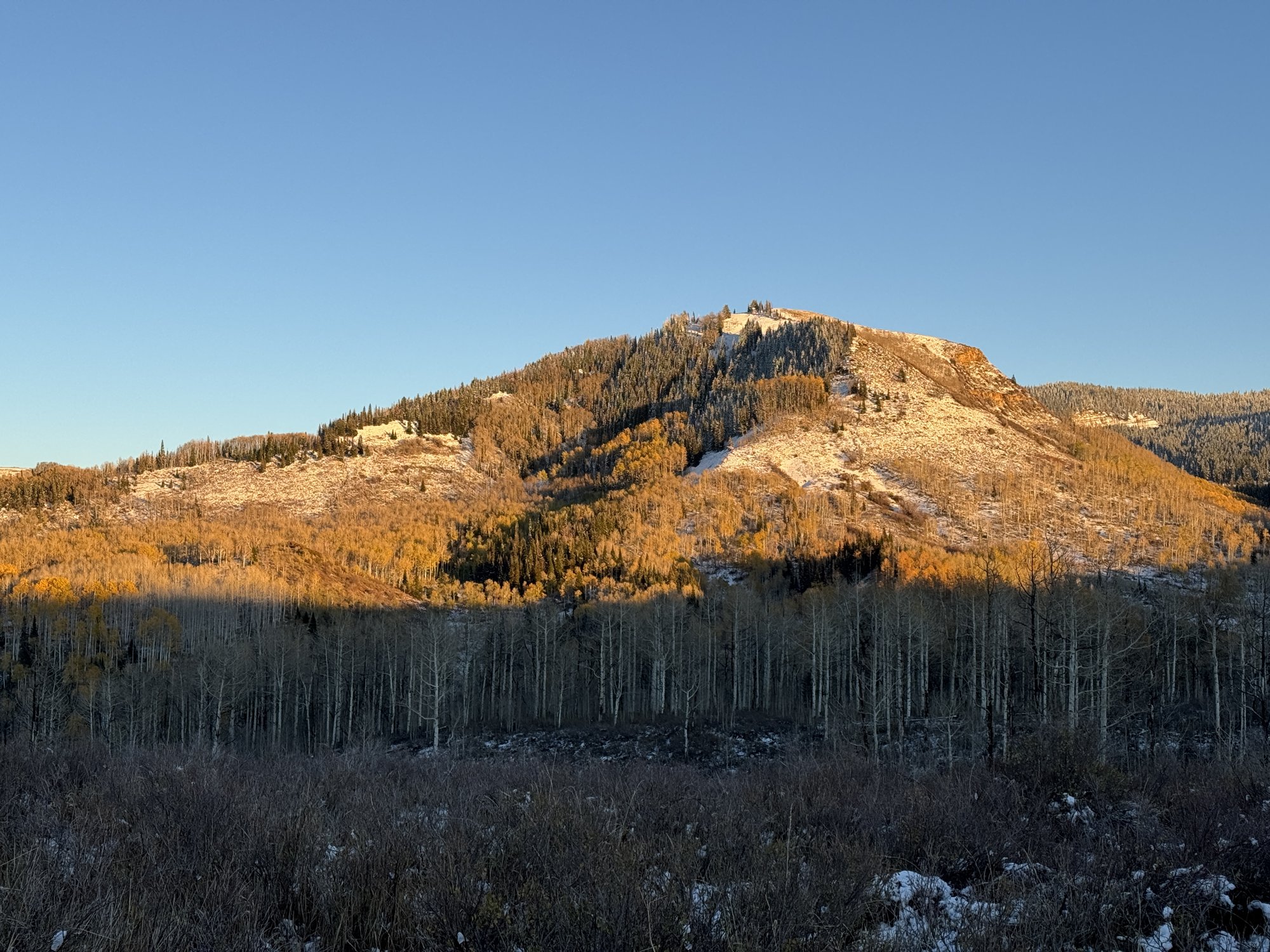
Season: Colorado first rifle elk
Area: Meeker area, GMU 12 (tag EF011O1R, valid in GMUs 11, 12, 13, 23, 24, 33, 131, 211, and 231)
Dates: October 12 to 16
Planning around the weather
On Monday, October 12, I began packing for first rifle elk season, which opened on October 14. I reviewed the forecast for the units on my tag, which covered GMUs 11, 12, 13, 23, 24, 33, 131, 211, and 231 around Meeker. It called for 6 to 12 inches of snow at the start of opening day and into the next day, with the heavier amounts above 10,000 feet.
After calling a few people and reviewing the NOAA forecast that week, I decided to stay on the safe side and postpone my hunt. Driving westbound on I-70 in those conditions wasn’t particularly inviting. Unfortunately, this cost me two valuable days of the season.
Arriving at a crowded trailhead
On Thursday at 10:00 AM I left home for Meeker, arriving shortly after 3:30 PM. I was shocked at the number of people, trucks, trailers, and horses filling the lower lot at the trailhead. I drove slowly toward the upper lot, gauging how much pressure the area was getting. Again, I found a cul-de-sac of trailers, vehicles, and campers. I found enough space to back my truck in and began setting up camp, since the sun would set in a few hours and temperatures would drop sharply.
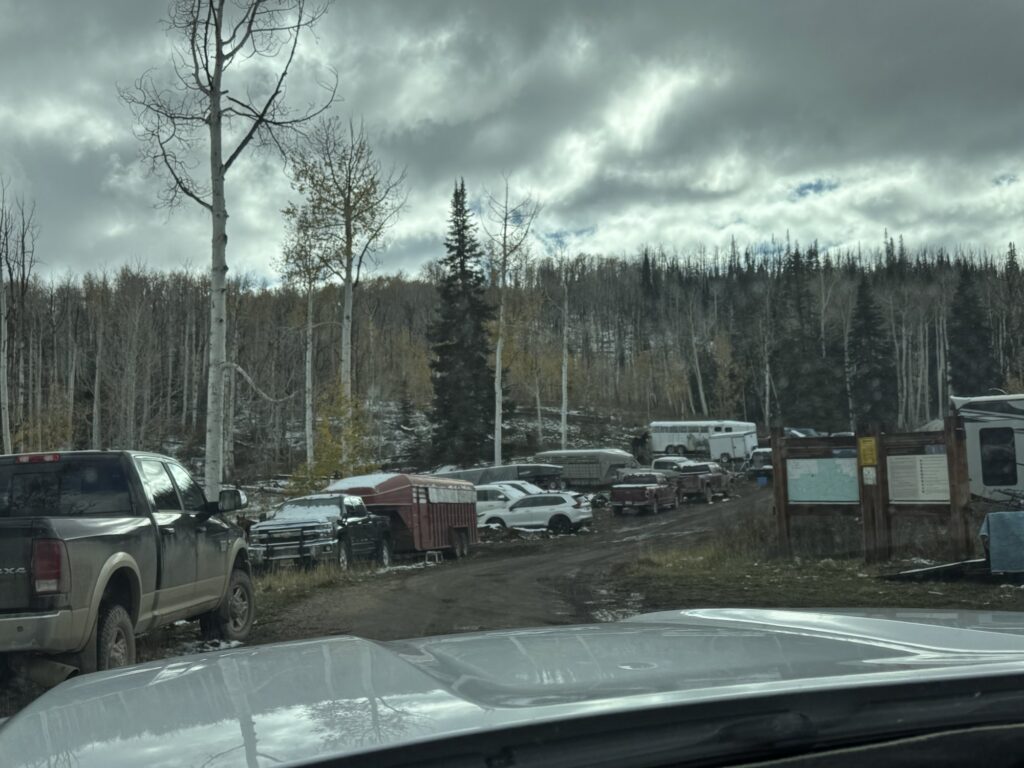
I set up the rooftop tent and unpacked and prepped my sleeping bag.
Evening scouting hike
My plan was to briefly scout the area before the next day’s hunt. I set off on the trail with my rifle and blaze orange vest and hat. Immediately I was faced with thick, slick mud sliding beneath me. I made my way slowly up the trail, with my hiking poles taking the brunt of my weight and providing traction.
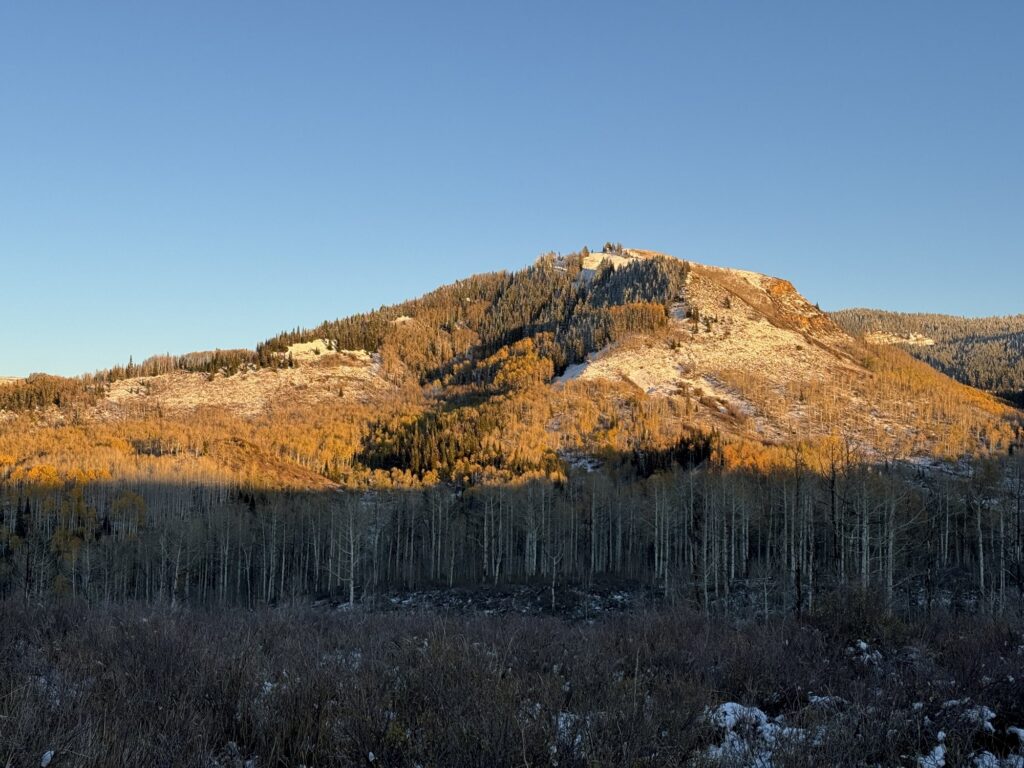
I glassed from a few knobs and was happy to see the south-facing slopes lit up by the sunset. As expected, the temperature dropped, and I added another hunting jacket for insulation. I covered about 3.7 miles round trip, glassing from openings along the tree line, then headed back to camp as the sun went down.
Camp routine
Dinner was boiled water in a Jetboil: a Peak Chicken Alfredo meal and a shrimp ramen soup. Being the anxious individual I am, I was careful to put everything back exactly where it belonged and keep my trash stashed away so bears couldn’t get to it.
I climbed into the tent, careful not to bring in mud from the hike, and changed from my hunting clothes into warm pajamas. I brought in a book, my sidearm, an iPad with the onX Hunt map downloaded for review, a headlamp, extra warm layers (beanie, scarf, and gloves), and a space heater. Surprisingly, I had two bars of service, so I called my girlfriend to let her know everything was okay before an early night.
The heater problem
I ran the space heater for about 30 minutes, which warmed the tent nicely, then turned it off and fell asleep to a podcast on a 30-minute sleep timer. Or tried to. After 30 minutes I was still awake. I reset the timer, and 30 minutes later I was still awake. By then the heat had escaped, and I could see my breath from my sleeping bag. I started to worry: “If this is one hour in the tent, how am I going to get through seven more?”
The heater would not relight. I kept priming it and pressing the igniter. Nothing. Thinking the canister might be empty, I climbed out to the truck bed for a new one. I swapped canisters and tried again. Still nothing. I could smell fuel and see the igniter sparking, but it would not burn.
I grabbed a propane torch head from the truck, lit it, and used it as the ignition source while I turned on the heater’s fuel. It worked. I let the setup run for about 30 minutes, and the tent warmed up again. By then it was 12:30 AM.
Carbon monoxide readings
Soon my head started to hurt, and I wondered if all that combustion was producing carbon monoxide. I turned on my carbon monoxide detector. It read 143 ppm, then 153 ppm, then peaked at 167 ppm. I wasn’t sure what a safe level was. With my limited service, a quick search told me to evacuate immediately and call 911.
I set the detector outside to reset it, thinking it might be faulty. It dropped to 0. Shoot. Do I open the vents and lose the heat I had worked so hard for? I opened a few slits in the tent windows to let air circulate, and the reading dropped, but not by much. Finally I opened the vents fully. After two hours the tent was down to 50 ppm.
Irritable and with a headache, I tried to sleep in the cold. It was about 3:30 AM by the time I fell asleep, and hunters moving around the trailhead woke me soon after. I stayed in camp for more sleep and finally got up at 7:00 AM to the sun heating the tent roof and water dripping down. The entire ceiling was covered in condensation. Was there really that much moisture after losing all my heat overnight?
The following morning I did some research and realized the heater was never broken. My Mr. Heater has a built-in safety feature that shuts it off when it senses unsafe air in an enclosed space. I was unaware of this. By lighting it with the torch, I had worked around the very feature meant to protect me.
Lessons learned
- Carbon monoxide is a real risk in a closed tent. A detector earned its place in my gear. Never run a heater with a makeshift ignition in a sealed tent, and keep vents open whenever any heater runs.
- Test your heater at home before the trip, including relighting it after it has run and cooled.
- Plan for condensation. A closed tent on a cold night collects moisture from breathing alone. Some ventilation helps, even if you lose some heat.
- Expect crowds on opening weekend at popular trailheads, and arrive early to get a good spot.
- Weather can cost you days. Waiting out the snow was the safe call, but it is worth planning a flexible schedule around the forecast.
- Most tent heaters are designed for wall tents. In a wall tent, people sleep on cots, so the combustion gases are not at the same level as your head, and there is far more air volume to heat. A rooftop tent puts your head right at the heater’s level in a small space. I’m still working on a better heating solution for the tent.
- A rooftop tent makes hunting mornings harder. Because the tent stays cold most of the night, your clothes are cold too, and nobody wants to put on cold clothes at 5:00 AM. My boots, caked in mud from the afternoon hike, froze overnight into solid bricks that had to be thawed out. A warm camp that keeps your clothing warm and dry is imperative, and a rooftop tent simply can’t provide that.
Gear notes
- Worth it: Kidde carbon monoxide detector, hiking poles in mud, onX Hunt with offline maps, Jetboil Flash Java stove
- Know your gear: the space heater was working as designed. Read the manual on its safety shutoff before the trip.
As an Amazon Associate I earn from qualifying purchases.